Chapter 14: Knowledge Retrieval (RAG)
第 14 章:知识检索(RAG)
LLMs exhibit substantial capabilities in generating human-like text. However, their knowledge base is typically confined to the data on which they were trained, limiting their access to real-time information, specific company data, or highly specialized details. Knowledge Retrieval (RAG, or Retrieval Augmented Generation), addresses this limitation. RAG enables LLMs to access and integrate external, current, and context-specific information, thereby enhancing the accuracy, relevance, and factual basis of their outputs. LLM 在生成类人文本方面展现出了强大的能力。然而,它们的知识库通常局限于训练时使用的数据,这限制了它们对实时信息、特定公司数据或高度专业化细节的访问。知识检索(RAG,即检索增强生成)技术正是为了解决这一局限性而设计的。RAG 使 LLM 能够访问和整合外部信息、实时数据和特定上下文内容,从而显著提高其输出的准确性、相关性和事实基础。 For AI agents, this is crucial as it allows them to ground their actions and responses in real-time, verifiable data beyond their static training. This capability enables them to perform complex tasks accurately, such as accessing the latest company policies to answer a specific question or checking current inventory before placing an order. By integrating external knowledge, RAG transforms agents from simple conversationalists into effective, data-driven tools capable of executing meaningful work. 对于 AI 智能体来说,这一能力尤为关键——它让智能体能够基于实时、可验证的数据来采取行动和作出回应,而不仅仅依赖于静态的训练数据。这种能力使得智能体能够准确地执行复杂任务,例如查询最新的公司政策来回答特定问题,或在下订单前检查当前库存状况。通过整合外部知识,RAG 将智能体从简单的对话者转变为能够执行有意义工作的有效、数据驱动的工具。
Knowledge Retrieval (RAG) Pattern Overview
知识检索(RAG)模式概述
The Knowledge Retrieval (RAG) pattern significantly enhances the capabilities of LLMs by granting them access to external knowledge bases before generating a response. Instead of relying solely on their internal, pre-trained knowledge, RAG allows LLMs to “look up” information, much like a human might consult a book or search the internet. This process empowers LLMs to provide more accurate, up-to-date, and verifiable answers.
知识检索(RAG)模式通过在生成响应之前赋予 LLM 访问外部知识库的权限,显著增强了它们的能力。与仅依赖内部预训练知识不同,RAG 允许 LLM “查找”信息,就像人类查阅书籍或搜索互联网一样。这一过程使 LLM 能够提供更准确、更新及时且可验证的答案。
When a user poses a question or gives a prompt to an AI system using RAG, the query isn’t sent directly to the LLM. Instead, the system first scours a vast external knowledge base—a highly organized library of documents, databases, or web pages—for relevant information. This search is not a simple keyword match; it’s a “semantic search” that understands the user’s intent and the meaning behind their words. This initial search pulls out the most pertinent snippets or “chunks” of information. These extracted pieces are then “augmented,” or added, to the original prompt, creating a richer, more informed query. Finally, this enhanced prompt is sent to the LLM. With this additional context, the LLM can generate a response that is not only fluent and natural but also factually grounded in the retrieved data.
当用户向使用 RAG 的 AI 系统提出问题或发出指令时,查询不会直接发送给 LLM。相反,系统首先在一个庞大的外部知识库(高度组织化的文档、数据库或网页集合)中搜索相关信息。这种搜索不是简单的关键字匹配,而是一种能够理解用户意图和词语背后含义的”语义搜索”。初始搜索会提取出最相关的信息片段或”块”。然后,这些提取的片段被”增强”到原始提示中,形成一个更丰富、信息量更大的查询。最后,这个增强的提示被发送给 LLM。借助这些额外的上下文信息,LLM 能够生成不仅流畅自然,而且在事实上基于检索数据的响应。
The RAG framework provides several significant benefits. It allows LLMs to access up-to-date information, thereby overcoming the constraints of their static training data. This approach also reduces the risk of “hallucination”—the generation of false information—by grounding responses in verifiable data. Moreover, LLMs can utilize specialized knowledge found in internal company documents or wikis. A vital advantage of this process is the capability to offer “citations,” which pinpoint the exact source of information, thereby enhancing the trustworthiness and verifiability of the AI’s responses..
RAG 框架提供了几个重要优势。它允许 LLM 访问最新信息,从而克服了静态训练数据的局限性。这种方法还通过将响应建立在可验证的数据上,减少了”幻觉”(生成虚假信息)的风险。此外,LLM 可以利用内部公司文档或维基中的专业知识。这一过程的另一个重要优势是能够提供”引用”,即明确指出信息的来源,从而增强 AI 响应的可信度和可验证性。
To fully appreciate how RAG functions, it’s essential to understand a few core concepts (see Fig.1):
要充分理解 RAG 的工作原理,需要掌握几个核心概念(见图 1):
Embeddings: In the context of LLMs, embeddings are numerical representations of text, such as words, phrases, or entire documents. These representations are in the form of a vector, which is a list of numbers. The key idea is to capture the semantic meaning and the relationships between different pieces of text in a mathematical space. Words or phrases with similar meanings will have embeddings that are closer to each other in this vector space. For instance, imagine a simple 2D graph. The word “cat” might be represented by the coordinates (2, 3), while “kitten” would be very close at (2.1, 3.1). In contrast, the word “car” would have a distant coordinate like (8, 1), reflecting its different meaning. In reality, these embeddings are in a much higher-dimensional space with hundreds or even thousands of dimensions, allowing for a very nuanced understanding of language.
嵌入(Embeddings):在 LLM 的语境中,嵌入是文本的数值表示形式,可以是单词、短语或整个文档。这些表示以向量的形式存在,即一系列数字。其核心思想是在数学空间中捕捉不同文本片段的语义含义和关系。具有相似含义的单词或短语在向量空间中会彼此靠近。例如,想象一个简单的二维坐标系,”cat”这个词可能位于坐标 (2, 3),而”kitten”则非常接近,位于 (2.1, 3.1)。相比之下,”car”这个词的位置则较远,比如 (8, 1),反映出其不同的含义。实际上,这些嵌入存在于具有数百甚至数千个维度的高维空间中,从而能够对语言进行非常细致的理解。
Text Similarity: Text similarity refers to the measure of how alike two pieces of text are. This can be at a surface level, looking at the overlap of words (lexical similarity), or at a deeper, meaning-based level. In the context of RAG, text similarity is crucial for finding the most relevant information in the knowledge base that corresponds to a user’s query. For instance, consider the sentences: “What is the capital of France?” and “Which city is the capital of France?”. While the wording is different, they are asking the same question. A good text similarity model would recognize this and assign a high similarity score to these two sentences, even though they only share a few words. This is often calculated using the embeddings of the texts.
文本相似度:文本相似度指的是衡量两段文本相似程度的指标。这可以是表面层次的,主要关注词汇的重叠(词汇相似度),也可以是更深层次的,基于文本的含义。在 RAG 的语境中,文本相似度对于在知识库中查找与用户查询最相关的信息至关重要。例如,考虑这两个句子:”What is the capital of France?”和”Which city is the capital of France?”。虽然措辞不同,但它们询问的是同一个问题。一个好的文本相似度模型能够识别这一点,并为这两个句子分配较高的相似度分数,即使它们只共享少数几个单词。这通常通过计算文本的嵌入来实现。
Semantic Similarity and Distance: Semantic similarity is a more advanced form of text similarity that focuses purely on the meaning and context of the text, rather than just the words used. It aims to understand if two pieces of text convey the same concept or idea. Semantic distance is the inverse of this; a high semantic similarity implies a low semantic distance, and vice versa. In RAG, semantic search relies on finding documents with the smallest semantic distance to the user’s query. For instance, the phrases “a furry feline companion” and “a domestic cat” have no words in common besides “a”. However, a model that understands semantic similarity would recognize that they refer to the same thing and would consider them to be highly similar. This is because their embeddings would be very close in the vector space, indicating a small semantic distance. This is the “smart search” that allows RAG to find relevant information even when the user’s wording doesn’t exactly match the text in the knowledge base.
语义相似度和距离:语义相似度是文本相似度的一种更高级形式,它纯粹关注文本的含义和上下文,而不仅仅是使用的单词。其目标是理解两段文本是否传达相同的概念或想法。语义距离则是语义相似度的反义词;高语义相似度意味着低语义距离,反之亦然。在 RAG 中,语义搜索依赖于查找与用户查询语义距离最小的文档。例如,短语”a furry feline companion”和”a domestic cat”除了冠词”a”外没有共同的单词。然而,能够理解语义相似度的模型会识别出它们指的是同一事物,并认为它们高度相似。这是因为它们的嵌入在向量空间中非常接近,表明语义距离很小。这就是 RAG 能够找到相关信息的”智能搜索”机制——即使用户的措辞与知识库中的文本不完全匹配。
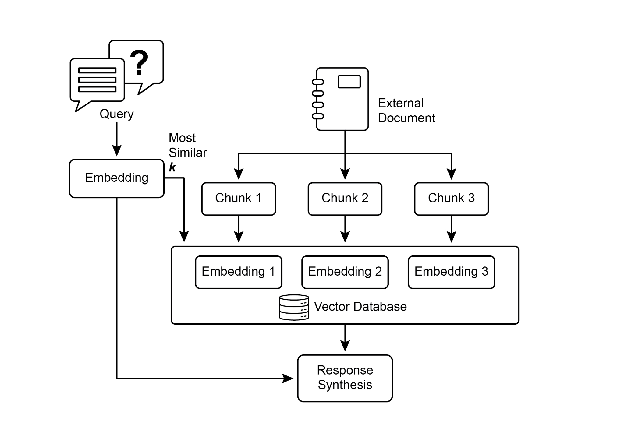 Fig.1: RAG Core Concepts: Chunking, Embeddings, and Vector Database
图 1:RAG 核心概念:分块、嵌入和向量数据库
Chunking of Documents: Chunking is the process of breaking down large documents into smaller, more manageable pieces, or “chunks.” For a RAG system to work efficiently, it cannot feed entire large documents into the LLM. Instead, it processes these smaller chunks. The way documents are chunked is important for preserving the context and meaning of the information. For instance, instead of treating a 50-page user manual as a single block of text, a chunking strategy might break it down into sections, paragraphs, or even sentences. For instance, a section on “Troubleshooting” would be a separate chunk from the “Installation Guide.” When a user asks a question about a specific problem, the RAG system can then retrieve the most relevant troubleshooting chunk, rather than the entire manual. This makes the retrieval process faster and the information provided to the LLM more focused and relevant to the user’s immediate need. Once documents are chunked, the RAG system must employ a retrieval technique to find the most relevant pieces for a given query. The primary method is vector search, which uses embeddings and semantic distance to find chunks that are conceptually similar to the user’s question. An older, but still valuable, technique is BM25, a keyword-based algorithm that ranks chunks based on term frequency without understanding semantic meaning. To get the best of both worlds, hybrid search approaches are often used, combining the keyword precision of BM25 with the contextual understanding of semantic search. This fusion allows for more robust and accurate retrieval, capturing both literal matches and conceptual relevance.
文档分块:分块是将大型文档分解为更小、更易于管理的片段或”块”的过程。为了使 RAG 系统高效工作,它不能将整个大型文档直接输入 LLM,而是处理这些更小的块。文档分块的方式对于保持信息的上下文和含义至关重要。例如,与其将 50 页的用户手册视为单个文本块,分块策略可能会将其分解为章节、段落甚至句子。这样,”故障排除”部分就可以与”安装指南”分开作为独立的块。当用户询问特定问题时,RAG 系统可以检索最相关的故障排除块,而不是整个手册。这使得检索过程更快,提供给 LLM 的信息更加集中,更符合用户的直接需求。文档分块完成后,RAG 系统必须使用检索技术来找到给定查询的最相关片段。主要方法是向量搜索,它利用嵌入和语义距离来查找概念上与用户问题相似的块。另一种较旧但仍然有价值的技术是 BM25,这是一种基于关键字的算法,根据词频对块进行排名,但不理解语义含义。为了获得两全其美的效果,通常使用混合搜索方法,将 BM25 的关键字精度与语义搜索的上下文理解相结合。这种融合实现了更强大和准确的检索,能够捕获字面匹配和概念相关性。
Vector databases: A vector database is a specialized type of database designed to store and query embeddings efficiently. After documents are chunked and converted into embeddings, these high-dimensional vectors are stored in a vector database. Traditional retrieval techniques, like keyword-based search, are excellent at finding documents containing exact words from a query but lack a deep understanding of language. They wouldn’t recognize that “furry feline companion” means “cat.” This is where vector databases excel. They are built specifically for semantic search. By storing text as numerical vectors, they can find results based on conceptual meaning, not just keyword overlap. When a user’s query is also converted into a vector, the database uses highly optimized algorithms (like HNSW - Hierarchical Navigable Small World) to rapidly search through millions of vectors and find the ones that are “closest” in meaning. This approach is far superior for RAG because it uncovers relevant context even if the user’s phrasing is completely different from the source documents. In essence, while other techniques search for words, vector databases search for meaning. This technology is implemented in various forms, from managed databases like Pinecone and Weaviate to open-source solutions such as Chroma DB, Milvus, and Qdrant. Even existing databases can be augmented with vector search capabilities, as seen with Redis, Elasticsearch, and Postgres (using the pgvector extension). The core retrieval mechanisms are often powered by libraries like Meta AI’s FAISS or Google Research’s ScaNN, which are fundamental to the efficiency of these systems.
向量数据库:向量数据库是一种专门设计用于高效存储和查询嵌入的专用数据库类型。在文档被分块并转换为嵌入后,这些高维向量被存储在向量数据库中。传统的检索技术(如基于关键字的搜索)非常擅长查找包含查询中确切单词的文档,但缺乏对语言的深入理解。它们无法识别”furry feline companion”意味着”cat”。这就是向量数据库的优势所在——它们专门为语义搜索而构建。通过将文本存储为数值向量,它们可以基于概念含义而不仅仅是关键字重叠来查找结果。当用户的查询也被转换为向量时,数据库使用高度优化的算法(如 HNSW——分层可导航小世界)快速搜索数百万个向量,并找到在含义上”最接近”的向量。这种方法对于 RAG 来说要优越得多,因为即使用户的措辞与源文档完全不同,它也能发现相关上下文。本质上,虽然其他技术搜索单词,向量数据库搜索含义。这项技术以各种形式实现,从托管数据库如 Pinecone 和 Weaviate,到开源解决方案如 Chroma DB、Milvus 和 Qdrant。甚至现有数据库也可以增强向量搜索功能,如 Redis、Elasticsearch 和 Postgres(使用 pgvector 扩展)。核心检索机制通常由 Meta AI 的 FAISS 或 Google Research 的 ScaNN 等库提供支持,这些库对这些系统的效率至关重要。
RAG’s Challenges: Despite its power, the RAG pattern is not without its challenges. A primary issue arises when the information needed to answer a query is not confined to a single chunk but is spread across multiple parts of a document or even several documents. In such cases, the retriever might fail to gather all the necessary context, leading to an incomplete or inaccurate answer. The system’s effectiveness is also highly dependent on the quality of the chunking and retrieval process; if irrelevant chunks are retrieved, it can introduce noise and confuse the LLM. Furthermore, effectively synthesizing information from potentially contradictory sources remains a significant hurdle for these systems. Besides that, another challenge is that RAG requires the entire knowledge base to be pre-processed and stored in specialized databases, such as vector or graph databases, which is a considerable undertaking. Consequently, this knowledge requires periodic reconciliation to remain up-to-date, a crucial task when dealing with evolving sources like company wikis. This entire process can have a noticeable impact on performance, increasing latency, operational costs, and the number of tokens used in the final prompt.
RAG 的挑战:尽管功能强大,RAG 模式并非没有挑战。一个主要问题出现在回答查询所需的信息不局限于单个块,而是分散在文档的多个部分甚至多个文档中时。在这种情况下,检索器可能无法收集所有必要的上下文,导致答案不完整或不准确。系统的有效性还高度依赖于分块和检索过程的质量;如果检索到不相关的块,可能会引入噪声并混淆 LLM。此外,有效综合来自潜在矛盾来源的信息仍然是这些系统的一个重大障碍。除此之外,另一个挑战是 RAG 需要将整个知识库预处理并存储在专门的数据库中(如向量或图数据库),这是一项相当大的工作。因此,这些知识需要定期更新以保持最新,这在处理不断演变的来源(如公司维基)时是一项关键任务。整个过程可能对性能产生明显影响,增加延迟、运营成本和最终提示中使用的 token 数量。
In summary, the Retrieval-Augmented Generation (RAG) pattern represents a significant leap forward in making AI more knowledgeable and reliable. By seamlessly integrating an external knowledge retrieval step into the generation process, RAG addresses some of the core limitations of standalone LLMs. The foundational concepts of embeddings and semantic similarity, combined with retrieval techniques like keyword and hybrid search, allow the system to intelligently find relevant information, which is made manageable through strategic chunking. This entire retrieval process is powered by specialized vector databases designed to store and efficiently query millions of embeddings at scale. While challenges in retrieving fragmented or contradictory information persist, RAG empowers LLMs to produce answers that are not only contextually appropriate but also anchored in verifiable facts, fostering greater trust and utility in AI.
总之,检索增强生成(RAG)模式代表了使 AI 更加知识渊博和可靠的重大飞跃。通过将外部知识检索步骤无缝集成到生成过程中,RAG 解决了独立 LLM 的一些核心局限。嵌入和语义相似度的基础概念,结合关键字和混合搜索等检索技术,允许系统智能地找到相关信息,通过战略性分块使其可管理。这整个检索过程由专门的向量数据库提供支持,这些数据库旨在大规模存储和高效查询数百万个嵌入。虽然检索碎片化或矛盾信息的挑战仍然存在,RAG 使 LLM 能够产生不仅在上下文上适当而且建立在可验证事实基础上的答案,从而在 AI 中培养更大的信任和实用性。
Graph RAG: GraphRAG is an advanced form of Retrieval-Augmented Generation that utilizes a knowledge graph instead of a simple vector database for information retrieval. It answers complex queries by navigating the explicit relationships (edges) between data entities (nodes) within this structured knowledge base. A key advantage is its ability to synthesize answers from information fragmented across multiple documents, a common failing of traditional RAG. By understanding these connections, GraphRAG provides more contextually accurate and nuanced responses.
图 RAG(Graph RAG):GraphRAG 是检索增强生成的一种高级形式,它利用知识图谱而不是简单的向量数据库进行信息检索。它通过在这个结构化知识库中导航数据实体(节点)之间的明确关系(边)来回答复杂查询。一个关键优势是它能够综合来自多个文档的碎片化信息来生成答案,这是传统 RAG 的常见失败之处。通过理解这些连接,GraphRAG 提供了更多上下文准确和细致的响应。
Use cases include complex financial analysis, connecting companies to market events, and scientific research for discovering relationships between genes and diseases. The primary drawback, however, is the significant complexity, cost, and expertise required to build and maintain a high-quality knowledge graph. This setup is also less flexible and can introduce higher latency compared to simpler vector search systems. The system’s effectiveness is entirely dependent on the quality and completeness of the underlying graph structure. Consequently, GraphRAG offers superior contextual reasoning for intricate questions but at a much higher implementation and maintenance cost. In summary, it excels where deep, interconnected insights are more critical than the speed and simplicity of standard RAG.
用例包括复杂的金融分析(将公司与市场事件联系起来)以及用于发现基因和疾病之间关系的科学研究。然而,主要缺点是构建和维护高质量知识图谱所需的显著复杂性、成本和专业知识。与更简单的向量搜索系统相比,这种设置也不太灵活,并且可能引入更高的延迟。系统的有效性完全取决于底层图结构的质量和完整性。因此,GraphRAG 为复杂问题提供了卓越的上下文推理,但实施和维护成本要高得多。总之,在深度、互联的洞察比标准 RAG 的速度和简单性更重要的情况下,它表现出色。
Agentic RAG: An evolution of this pattern, known as Agentic RAG (see Fig.2), introduces a reasoning and decision-making layer to significantly enhance the reliability of information extraction. Instead of just retrieving and augmenting, an “agent”—a specialized AI component—acts as a critical gatekeeper and refiner of knowledge. Rather than passively accepting the initially retrieved data, this agent actively interrogates its quality, relevance, and completeness, as illustrated by the following scenarios.
Agentic RAG:这种模式的演进被称为 Agentic RAG(见图 2),它引入了一个推理和决策层,以显著增强信息提取的可靠性。Agentic RAG 不仅仅是检索和增强,一个”智能体”——一个专门的 AI 组件——充当知识的关键守门人和精炼者。这个智能体不是被动地接受最初检索的数据,而是主动质疑其质量、相关性和完整性,如以下场景所示。
First, an agent excels at reflection and source validation. If a user asks, “What is our company’s policy on remote work?” a standard RAG might pull up a 2020 blog post alongside the official 2025 policy document. The agent, however, would analyze the documents’ metadata, recognize the 2025 policy as the most current and authoritative source, and discard the outdated blog post before sending the correct context to the LLM for a precise answer.
首先,智能体擅长反思和源验证。如果用户问:”我们公司的远程工作政策是什么?”标准 RAG 可能会提取 2020 年的博客文章和官方的 2025 年政策文档。然而,智能体会分析文档的元数据,识别 2025 年政策为最新和最权威的来源,并在将正确的上下文发送到 LLM 以获得精确答案之前丢弃过时的博客文章。
Fig.1: RAG Core Concepts: Chunking, Embeddings, and Vector Database
图 1:RAG 核心概念:分块、嵌入和向量数据库
Chunking of Documents: Chunking is the process of breaking down large documents into smaller, more manageable pieces, or “chunks.” For a RAG system to work efficiently, it cannot feed entire large documents into the LLM. Instead, it processes these smaller chunks. The way documents are chunked is important for preserving the context and meaning of the information. For instance, instead of treating a 50-page user manual as a single block of text, a chunking strategy might break it down into sections, paragraphs, or even sentences. For instance, a section on “Troubleshooting” would be a separate chunk from the “Installation Guide.” When a user asks a question about a specific problem, the RAG system can then retrieve the most relevant troubleshooting chunk, rather than the entire manual. This makes the retrieval process faster and the information provided to the LLM more focused and relevant to the user’s immediate need. Once documents are chunked, the RAG system must employ a retrieval technique to find the most relevant pieces for a given query. The primary method is vector search, which uses embeddings and semantic distance to find chunks that are conceptually similar to the user’s question. An older, but still valuable, technique is BM25, a keyword-based algorithm that ranks chunks based on term frequency without understanding semantic meaning. To get the best of both worlds, hybrid search approaches are often used, combining the keyword precision of BM25 with the contextual understanding of semantic search. This fusion allows for more robust and accurate retrieval, capturing both literal matches and conceptual relevance.
文档分块:分块是将大型文档分解为更小、更易于管理的片段或”块”的过程。为了使 RAG 系统高效工作,它不能将整个大型文档直接输入 LLM,而是处理这些更小的块。文档分块的方式对于保持信息的上下文和含义至关重要。例如,与其将 50 页的用户手册视为单个文本块,分块策略可能会将其分解为章节、段落甚至句子。这样,”故障排除”部分就可以与”安装指南”分开作为独立的块。当用户询问特定问题时,RAG 系统可以检索最相关的故障排除块,而不是整个手册。这使得检索过程更快,提供给 LLM 的信息更加集中,更符合用户的直接需求。文档分块完成后,RAG 系统必须使用检索技术来找到给定查询的最相关片段。主要方法是向量搜索,它利用嵌入和语义距离来查找概念上与用户问题相似的块。另一种较旧但仍然有价值的技术是 BM25,这是一种基于关键字的算法,根据词频对块进行排名,但不理解语义含义。为了获得两全其美的效果,通常使用混合搜索方法,将 BM25 的关键字精度与语义搜索的上下文理解相结合。这种融合实现了更强大和准确的检索,能够捕获字面匹配和概念相关性。
Vector databases: A vector database is a specialized type of database designed to store and query embeddings efficiently. After documents are chunked and converted into embeddings, these high-dimensional vectors are stored in a vector database. Traditional retrieval techniques, like keyword-based search, are excellent at finding documents containing exact words from a query but lack a deep understanding of language. They wouldn’t recognize that “furry feline companion” means “cat.” This is where vector databases excel. They are built specifically for semantic search. By storing text as numerical vectors, they can find results based on conceptual meaning, not just keyword overlap. When a user’s query is also converted into a vector, the database uses highly optimized algorithms (like HNSW - Hierarchical Navigable Small World) to rapidly search through millions of vectors and find the ones that are “closest” in meaning. This approach is far superior for RAG because it uncovers relevant context even if the user’s phrasing is completely different from the source documents. In essence, while other techniques search for words, vector databases search for meaning. This technology is implemented in various forms, from managed databases like Pinecone and Weaviate to open-source solutions such as Chroma DB, Milvus, and Qdrant. Even existing databases can be augmented with vector search capabilities, as seen with Redis, Elasticsearch, and Postgres (using the pgvector extension). The core retrieval mechanisms are often powered by libraries like Meta AI’s FAISS or Google Research’s ScaNN, which are fundamental to the efficiency of these systems.
向量数据库:向量数据库是一种专门设计用于高效存储和查询嵌入的专用数据库类型。在文档被分块并转换为嵌入后,这些高维向量被存储在向量数据库中。传统的检索技术(如基于关键字的搜索)非常擅长查找包含查询中确切单词的文档,但缺乏对语言的深入理解。它们无法识别”furry feline companion”意味着”cat”。这就是向量数据库的优势所在——它们专门为语义搜索而构建。通过将文本存储为数值向量,它们可以基于概念含义而不仅仅是关键字重叠来查找结果。当用户的查询也被转换为向量时,数据库使用高度优化的算法(如 HNSW——分层可导航小世界)快速搜索数百万个向量,并找到在含义上”最接近”的向量。这种方法对于 RAG 来说要优越得多,因为即使用户的措辞与源文档完全不同,它也能发现相关上下文。本质上,虽然其他技术搜索单词,向量数据库搜索含义。这项技术以各种形式实现,从托管数据库如 Pinecone 和 Weaviate,到开源解决方案如 Chroma DB、Milvus 和 Qdrant。甚至现有数据库也可以增强向量搜索功能,如 Redis、Elasticsearch 和 Postgres(使用 pgvector 扩展)。核心检索机制通常由 Meta AI 的 FAISS 或 Google Research 的 ScaNN 等库提供支持,这些库对这些系统的效率至关重要。
RAG’s Challenges: Despite its power, the RAG pattern is not without its challenges. A primary issue arises when the information needed to answer a query is not confined to a single chunk but is spread across multiple parts of a document or even several documents. In such cases, the retriever might fail to gather all the necessary context, leading to an incomplete or inaccurate answer. The system’s effectiveness is also highly dependent on the quality of the chunking and retrieval process; if irrelevant chunks are retrieved, it can introduce noise and confuse the LLM. Furthermore, effectively synthesizing information from potentially contradictory sources remains a significant hurdle for these systems. Besides that, another challenge is that RAG requires the entire knowledge base to be pre-processed and stored in specialized databases, such as vector or graph databases, which is a considerable undertaking. Consequently, this knowledge requires periodic reconciliation to remain up-to-date, a crucial task when dealing with evolving sources like company wikis. This entire process can have a noticeable impact on performance, increasing latency, operational costs, and the number of tokens used in the final prompt.
RAG 的挑战:尽管功能强大,RAG 模式并非没有挑战。一个主要问题出现在回答查询所需的信息不局限于单个块,而是分散在文档的多个部分甚至多个文档中时。在这种情况下,检索器可能无法收集所有必要的上下文,导致答案不完整或不准确。系统的有效性还高度依赖于分块和检索过程的质量;如果检索到不相关的块,可能会引入噪声并混淆 LLM。此外,有效综合来自潜在矛盾来源的信息仍然是这些系统的一个重大障碍。除此之外,另一个挑战是 RAG 需要将整个知识库预处理并存储在专门的数据库中(如向量或图数据库),这是一项相当大的工作。因此,这些知识需要定期更新以保持最新,这在处理不断演变的来源(如公司维基)时是一项关键任务。整个过程可能对性能产生明显影响,增加延迟、运营成本和最终提示中使用的 token 数量。
In summary, the Retrieval-Augmented Generation (RAG) pattern represents a significant leap forward in making AI more knowledgeable and reliable. By seamlessly integrating an external knowledge retrieval step into the generation process, RAG addresses some of the core limitations of standalone LLMs. The foundational concepts of embeddings and semantic similarity, combined with retrieval techniques like keyword and hybrid search, allow the system to intelligently find relevant information, which is made manageable through strategic chunking. This entire retrieval process is powered by specialized vector databases designed to store and efficiently query millions of embeddings at scale. While challenges in retrieving fragmented or contradictory information persist, RAG empowers LLMs to produce answers that are not only contextually appropriate but also anchored in verifiable facts, fostering greater trust and utility in AI.
总之,检索增强生成(RAG)模式代表了使 AI 更加知识渊博和可靠的重大飞跃。通过将外部知识检索步骤无缝集成到生成过程中,RAG 解决了独立 LLM 的一些核心局限。嵌入和语义相似度的基础概念,结合关键字和混合搜索等检索技术,允许系统智能地找到相关信息,通过战略性分块使其可管理。这整个检索过程由专门的向量数据库提供支持,这些数据库旨在大规模存储和高效查询数百万个嵌入。虽然检索碎片化或矛盾信息的挑战仍然存在,RAG 使 LLM 能够产生不仅在上下文上适当而且建立在可验证事实基础上的答案,从而在 AI 中培养更大的信任和实用性。
Graph RAG: GraphRAG is an advanced form of Retrieval-Augmented Generation that utilizes a knowledge graph instead of a simple vector database for information retrieval. It answers complex queries by navigating the explicit relationships (edges) between data entities (nodes) within this structured knowledge base. A key advantage is its ability to synthesize answers from information fragmented across multiple documents, a common failing of traditional RAG. By understanding these connections, GraphRAG provides more contextually accurate and nuanced responses.
图 RAG(Graph RAG):GraphRAG 是检索增强生成的一种高级形式,它利用知识图谱而不是简单的向量数据库进行信息检索。它通过在这个结构化知识库中导航数据实体(节点)之间的明确关系(边)来回答复杂查询。一个关键优势是它能够综合来自多个文档的碎片化信息来生成答案,这是传统 RAG 的常见失败之处。通过理解这些连接,GraphRAG 提供了更多上下文准确和细致的响应。
Use cases include complex financial analysis, connecting companies to market events, and scientific research for discovering relationships between genes and diseases. The primary drawback, however, is the significant complexity, cost, and expertise required to build and maintain a high-quality knowledge graph. This setup is also less flexible and can introduce higher latency compared to simpler vector search systems. The system’s effectiveness is entirely dependent on the quality and completeness of the underlying graph structure. Consequently, GraphRAG offers superior contextual reasoning for intricate questions but at a much higher implementation and maintenance cost. In summary, it excels where deep, interconnected insights are more critical than the speed and simplicity of standard RAG.
用例包括复杂的金融分析(将公司与市场事件联系起来)以及用于发现基因和疾病之间关系的科学研究。然而,主要缺点是构建和维护高质量知识图谱所需的显著复杂性、成本和专业知识。与更简单的向量搜索系统相比,这种设置也不太灵活,并且可能引入更高的延迟。系统的有效性完全取决于底层图结构的质量和完整性。因此,GraphRAG 为复杂问题提供了卓越的上下文推理,但实施和维护成本要高得多。总之,在深度、互联的洞察比标准 RAG 的速度和简单性更重要的情况下,它表现出色。
Agentic RAG: An evolution of this pattern, known as Agentic RAG (see Fig.2), introduces a reasoning and decision-making layer to significantly enhance the reliability of information extraction. Instead of just retrieving and augmenting, an “agent”—a specialized AI component—acts as a critical gatekeeper and refiner of knowledge. Rather than passively accepting the initially retrieved data, this agent actively interrogates its quality, relevance, and completeness, as illustrated by the following scenarios.
Agentic RAG:这种模式的演进被称为 Agentic RAG(见图 2),它引入了一个推理和决策层,以显著增强信息提取的可靠性。Agentic RAG 不仅仅是检索和增强,一个”智能体”——一个专门的 AI 组件——充当知识的关键守门人和精炼者。这个智能体不是被动地接受最初检索的数据,而是主动质疑其质量、相关性和完整性,如以下场景所示。
First, an agent excels at reflection and source validation. If a user asks, “What is our company’s policy on remote work?” a standard RAG might pull up a 2020 blog post alongside the official 2025 policy document. The agent, however, would analyze the documents’ metadata, recognize the 2025 policy as the most current and authoritative source, and discard the outdated blog post before sending the correct context to the LLM for a precise answer.
首先,智能体擅长反思和源验证。如果用户问:”我们公司的远程工作政策是什么?”标准 RAG 可能会提取 2020 年的博客文章和官方的 2025 年政策文档。然而,智能体会分析文档的元数据,识别 2025 年政策为最新和最权威的来源,并在将正确的上下文发送到 LLM 以获得精确答案之前丢弃过时的博客文章。
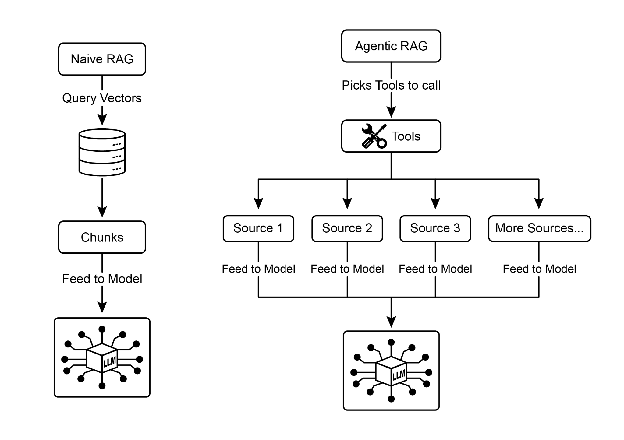 Fig.2: Agentic RAG introduces a reasoning agent that actively evaluates, reconciles, and refines retrieved information to ensure a more accurate and trustworthy final response.
图 2:Agentic RAG 引入了一个推理智能体,它主动评估、协调和精炼检索的信息,以确保更准确和可信的最终响应。
Second, an agent is adept at reconciling knowledge conflicts. Imagine a financial analyst asks, “What was Project Alpha’s Q1 budget?” The system retrieves two documents: an initial proposal stating a €50,000 budget and a finalized financial report listing it as €65,000. An Agentic RAG would identify this contradiction, prioritize the financial report as the more reliable source, and provide the LLM with the verified figure, ensuring the final answer is based on the most accurate data.
其次,智能体擅长协调知识冲突。想象一位金融分析师问:”Alpha 项目的第一季度预算是多少?”系统检索到两个文档:一个初始提案说明预算为 50,000 欧元,一个最终的财务报告列出为 65,000 欧元。Agentic RAG 会识别这种矛盾,将财务报告优先作为更可靠的来源,并向 LLM 提供经过验证的数字,确保最终答案基于最准确的数据。
Third, an agent can perform multi-step reasoning to synthesize complex answers. If a user asks, “How do our product’s features and pricing compare to Competitor X’s?” the agent would decompose this into separate sub-queries. It would initiate distinct searches for its own product’s features, its pricing, Competitor X’s features, and Competitor X’s pricing. After gathering these individual pieces of information, the agent would synthesize them into a structured, comparative context before feeding it to the LLM, enabling a comprehensive response that a simple retrieval could not have produced.
第三,智能体可以执行多步推理来综合复杂答案。如果用户问:”我们产品的功能和定价与竞争对手 X 相比如何?”智能体会将此分解为单独的子查询。它会为自己产品的功能、定价、竞争对手 X 的功能和竞争对手 X 的定价启动不同的搜索。在收集这些单独的信息片段后,智能体会将它们综合成结构化的比较上下文,然后再将其提供给 LLM,从而实现简单检索无法产生的全面响应。
Fourth, an agent can identify knowledge gaps and use external tools. Suppose a user asks, “What was the market’s immediate reaction to our new product launched yesterday?” The agent searches the internal knowledge base, which is updated weekly, and finds no relevant information. Recognizing this gap, it can then activate a tool—such as a live web-search API—to find recent news articles and social media sentiment. The agent then uses this freshly gathered external information to provide an up-to-the-minute answer, overcoming the limitations of its static internal database.
第四,智能体可以识别知识差距并使用外部工具。假设用户问:”市场对我们昨天推出的新产品的即时反应如何?”智能体搜索每周更新的内部知识库,没有找到相关信息。识别到这个差距,它可以激活一个工具——例如实时网络搜索 API——来查找最近的新闻文章和社交媒体情绪。然后智能体使用这些新收集的外部信息来提供最新的答案,克服其静态内部数据库的限制。
Challenges of Agentic RAG: While powerful, the agentic layer introduces its own set of challenges. The primary drawback is a significant increase in complexity and cost. Designing, implementing, and maintaining the agent’s decision-making logic and tool integrations requires substantial engineering effort and adds to computational expenses. This complexity can also lead to increased latency, as the agent’s cycles of reflection, tool use, and multi-step reasoning take more time than a standard, direct retrieval process. Furthermore, the agent itself can become a new source of error; a flawed reasoning process could cause it to get stuck in useless loops, misinterpret a task, or improperly discard relevant information, ultimately degrading the quality of the final response.
Agentic RAG 的挑战:虽然功能强大,但智能体层引入了其自身的一系列挑战。主要缺点是复杂性和成本的显著增加。设计、实施和维护智能体的决策逻辑和工具集成需要大量的工程工作,并增加了计算费用。这种复杂性也可能导致延迟增加,因为智能体的反思、工具使用和多步推理循环比标准的直接检索过程需要更多时间。此外,智能体本身可能成为新的错误来源;有缺陷的推理过程可能导致它陷入无用的循环,误解任务,或不当丢弃相关信息,最终降低最终响应的质量。
Fig.2: Agentic RAG introduces a reasoning agent that actively evaluates, reconciles, and refines retrieved information to ensure a more accurate and trustworthy final response.
图 2:Agentic RAG 引入了一个推理智能体,它主动评估、协调和精炼检索的信息,以确保更准确和可信的最终响应。
Second, an agent is adept at reconciling knowledge conflicts. Imagine a financial analyst asks, “What was Project Alpha’s Q1 budget?” The system retrieves two documents: an initial proposal stating a €50,000 budget and a finalized financial report listing it as €65,000. An Agentic RAG would identify this contradiction, prioritize the financial report as the more reliable source, and provide the LLM with the verified figure, ensuring the final answer is based on the most accurate data.
其次,智能体擅长协调知识冲突。想象一位金融分析师问:”Alpha 项目的第一季度预算是多少?”系统检索到两个文档:一个初始提案说明预算为 50,000 欧元,一个最终的财务报告列出为 65,000 欧元。Agentic RAG 会识别这种矛盾,将财务报告优先作为更可靠的来源,并向 LLM 提供经过验证的数字,确保最终答案基于最准确的数据。
Third, an agent can perform multi-step reasoning to synthesize complex answers. If a user asks, “How do our product’s features and pricing compare to Competitor X’s?” the agent would decompose this into separate sub-queries. It would initiate distinct searches for its own product’s features, its pricing, Competitor X’s features, and Competitor X’s pricing. After gathering these individual pieces of information, the agent would synthesize them into a structured, comparative context before feeding it to the LLM, enabling a comprehensive response that a simple retrieval could not have produced.
第三,智能体可以执行多步推理来综合复杂答案。如果用户问:”我们产品的功能和定价与竞争对手 X 相比如何?”智能体会将此分解为单独的子查询。它会为自己产品的功能、定价、竞争对手 X 的功能和竞争对手 X 的定价启动不同的搜索。在收集这些单独的信息片段后,智能体会将它们综合成结构化的比较上下文,然后再将其提供给 LLM,从而实现简单检索无法产生的全面响应。
Fourth, an agent can identify knowledge gaps and use external tools. Suppose a user asks, “What was the market’s immediate reaction to our new product launched yesterday?” The agent searches the internal knowledge base, which is updated weekly, and finds no relevant information. Recognizing this gap, it can then activate a tool—such as a live web-search API—to find recent news articles and social media sentiment. The agent then uses this freshly gathered external information to provide an up-to-the-minute answer, overcoming the limitations of its static internal database.
第四,智能体可以识别知识差距并使用外部工具。假设用户问:”市场对我们昨天推出的新产品的即时反应如何?”智能体搜索每周更新的内部知识库,没有找到相关信息。识别到这个差距,它可以激活一个工具——例如实时网络搜索 API——来查找最近的新闻文章和社交媒体情绪。然后智能体使用这些新收集的外部信息来提供最新的答案,克服其静态内部数据库的限制。
Challenges of Agentic RAG: While powerful, the agentic layer introduces its own set of challenges. The primary drawback is a significant increase in complexity and cost. Designing, implementing, and maintaining the agent’s decision-making logic and tool integrations requires substantial engineering effort and adds to computational expenses. This complexity can also lead to increased latency, as the agent’s cycles of reflection, tool use, and multi-step reasoning take more time than a standard, direct retrieval process. Furthermore, the agent itself can become a new source of error; a flawed reasoning process could cause it to get stuck in useless loops, misinterpret a task, or improperly discard relevant information, ultimately degrading the quality of the final response.
Agentic RAG 的挑战:虽然功能强大,但智能体层引入了其自身的一系列挑战。主要缺点是复杂性和成本的显著增加。设计、实施和维护智能体的决策逻辑和工具集成需要大量的工程工作,并增加了计算费用。这种复杂性也可能导致延迟增加,因为智能体的反思、工具使用和多步推理循环比标准的直接检索过程需要更多时间。此外,智能体本身可能成为新的错误来源;有缺陷的推理过程可能导致它陷入无用的循环,误解任务,或不当丢弃相关信息,最终降低最终响应的质量。
In summary: Agentic RAG represents a sophisticated evolution of the standard retrieval pattern, transforming it from a passive data pipeline into an active, problem-solving framework. By embedding a reasoning layer that can evaluate sources, reconcile conflicts, decompose complex questions, and use external tools, agents dramatically improve the reliability and depth of the generated answers. This advancement makes the AI more trustworthy and capable, though it comes with important trade-offs in system complexity, latency, and cost that must be carefully managed.
总结: Agentic RAG 代表了标准检索模式的复杂演进,将其从被动的数据管道转变为主动的、解决问题的框架。通过嵌入一个可以评估来源、协调冲突、分解复杂问题和使用外部工具的推理层,智能体显著提高了生成答案的可靠性和深度。这一进步使 AI 更加可信和有能力,尽管它带来了必须仔细管理的系统复杂性、延迟和成本方面的重要权衡。
Practical Applications & Use Cases
实际应用和用例
Knowledge Retrieval (RAG) is changing how Large Language Models (LLMs) are utilized across various industries, enhancing their ability to provide more accurate and contextually relevant responses. 知识检索(RAG)正在改变 LLM 在各个行业中的使用方式,显著增强了它们提供更准确和上下文相关响应的能力。 Applications include: 主要应用包括:
- Enterprise Search and Q\&A: Organizations can develop internal chatbots that respond to employee inquiries using internal documentation such as HR policies, technical manuals, and product specifications. The RAG system extracts relevant sections from these documents to inform the LLM’s response.
- 企业搜索和问答:组织可以开发内部聊天机器人,利用内部文档(如 HR 政策、技术手册和产品规格)来响应员工查询。RAG 系统从这些文档中提取相关部分,为 LLM 的响应提供信息支持。
- Customer Support and Helpdesks: RAG-based systems can offer precise and consistent responses to customer queries by accessing information from product manuals, frequently asked questions (FAQs), and support tickets. This can reduce the need for direct human intervention for routine issues.
- 客户支持和帮助台:基于 RAG 的系统可以通过访问产品手册、常见问题解答(FAQ)和支持工单中的信息,为客户查询提供精确和一致的响应。这可以减少对常规问题的直接人工干预需求,提高服务效率。
- Personalized Content Recommendation: Instead of basic keyword matching, RAG can identify and retrieve content (articles, products) that is semantically related to a user’s preferences or previous interactions, leading to more relevant recommendations.
- 个性化内容推荐:与基本的关键字匹配不同,RAG 能够识别和检索与用户偏好或先前交互在语义上相关的内容(如文章、产品),从而提供更加精准和个性化的推荐。
- News and Current Events Summarization: LLMs can be integrated with real-time news feeds. When prompted about a current event, the RAG system retrieves recent articles, allowing the LLM to produce an up-to-date summary.
- 新闻和时事摘要:LLM 可以与实时新闻源集成。当被询问关于时事的问题时,RAG 系统会检索最近的文章,使 LLM 能够生成基于最新信息的摘要。
By incorporating external knowledge, RAG extends the capabilities of LLMs beyond simple communication to function as knowledge processing systems.
通过整合外部知识,RAG 将 LLM 的能力从简单的通信工具扩展到作为知识处理系统发挥作用,大大提升了其实用价值。
Hands-On Code Example (ADK)
实践代码示例(ADK)
To illustrate the Knowledge Retrieval (RAG) pattern, let’s see three examples. 为了说明知识检索(RAG)模式,我们来看三个示例。 First, is how to use Google Search to do RAG and ground LLMs to search results. Since RAG involves accessing external information, the Google Search tool is a direct example of a built-in retrieval mechanism that can augment an LLM’s knowledge. 首先是如何使用 Google Search 实现 RAG 并让 LLM 基于搜索结果生成响应。由于 RAG 涉及访问外部信息,Google Search 工具就是内置检索机制的一个直接示例,可以增强 LLM 的知识。 ```python from google.adk.tools import google_search from google.adk.agents import Agent
search_agent = Agent( name=”research_assistant”, model=”gemini-2.0-flash-exp”, instruction=”You help users research topics. When asked, use the Google Search tool”, tools=[google_search] )
1
2
3
4
5
6
7
8
9
10
11
12
13
14
15
16
17
18
19
20
21
22
23
24
25
26
27
28
29
30

Second, this section explains how to utilize Vertex AI RAG capabilities within the Google ADK. The code provided demonstrates the initialization of VertexAiRagMemoryService from the ADK. This allows for establishing a connection to a Google Cloud Vertex AI RAG Corpus. The service is configured by specifying the corpus resource name and optional parameters such as SIMILARITY_TOP_K and VECTOR_DISTANCE_THRESHOLD. These parameters influence the retrieval process. SIMILARITY_TOP_K defines the number of top similar results to be retrieved. VECTOR_DISTANCE_THRESHOLD sets a limit on the semantic distance for the retrieved results. This setup enables agents to perform scalable and persistent semantic knowledge retrieval from the designated RAG Corpus. The process effectively integrates Google Cloud's RAG functionalities into an ADK agent, thereby supporting the development of responses grounded in factual data.
其次,本节介绍如何在 Google ADK 中利用 Vertex AI RAG 功能。提供的代码演示了如何从 ADK 初始化 VertexAiRagMemoryService,从而建立与 Google Cloud Vertex AI RAG Corpus 的连接。该服务通过指定 corpus 资源名称和可选参数(如 SIMILARITY_TOP_K 和 VECTOR_DISTANCE_THRESHOLD)进行配置,这些参数会影响检索过程。SIMILARITY_TOP_K 定义要检索的最相似结果数量,VECTOR_DISTANCE_THRESHOLD 设置检索结果的语义距离限制。这种设置使智能体能够从指定的 RAG Corpus 执行可扩展和持久的语义知识检索,有效地将 Google Cloud 的 RAG 功能集成到 ADK 智能体中,从而支持开发基于事实数据的响应。


```python
## Import the necessary VertexAiRagMemoryService class from the google.adk.memory module.
from google.adk.memory import VertexAiRagMemoryService

RAG_CORPUS_RESOURCE_NAME = "projects/your-gcp-project-id/locations/us-central1/ragCorpora/your-corpus-id"

## Define an optional parameter for the number of top similar results to retrieve.
## This controls how many relevant document chunks the RAG service will return.
SIMILARITY_TOP_K = 5

## Define an optional parameter for the vector distance threshold.
## This threshold determines the maximum semantic distance allowed for retrieved results;
## results with a distance greater than this value might be filtered out.
VECTOR_DISTANCE_THRESHOLD = 0.7

## Initialize an instance of VertexAiRagMemoryService.
## This sets up the connection to your Vertex AI RAG Corpus.
## - rag_corpus: Specifies the unique identifier for your RAG Corpus.
## - similarity_top_k: Sets the maximum number of similar results to fetch.
## - vector_distance_threshold: Defines the similarity threshold for filtering results.
memory_service = VertexAiRagMemoryService(
    rag_corpus=RAG_CORPUS_RESOURCE_NAME,
    similarity_top_k=SIMILARITY_TOP_K,
    vector_distance_threshold=VECTOR_DISTANCE_THRESHOLD
)
Hands-On Code Example (LangChain)
实践代码示例(LangChain)
Third, let’s walk through a complete example using LangChain.
第三个示例将演示如何使用 LangChain 实现完整的 RAG 流程。
1
2
3
4
5
6
7
8
9
10
11
12
13
14
15
16
17
18
19
20
21
22
23
24
25
26
27
28
29
30
31
32
33
34
35
36
37
38
39
40
41
42
43
44
45
46
47
48
49
50
51
52
53
54
55
56
57
58
59
60
61
62
63
64
65
66
67
68
69
70
71
72
73
74
75
76
77
78
79
80
81
82
83
84
85
86
87
88
89
90
91
92
93
94
95
96
97
98
99
100
101
102
103
104
105
106
107
108
109
110
111
112
import os
import requests
from typing import List, Dict, Any, TypedDict

from langchain_community.document_loaders import TextLoader
from langchain_core.documents import Document
from langchain_core.prompts import ChatPromptTemplate
from langchain_core.output_parsers import StrOutputParser
from langchain_community.embeddings import OpenAIEmbeddings
from langchain_community.vectorstores import Weaviate
from langchain_openai import ChatOpenAI
from langchain.text_splitter import CharacterTextSplitter
from langchain.schema.runnable import RunnablePassthrough
from langgraph.graph import StateGraph, END
import weaviate
from weaviate.embedded import EmbeddedOptions
import dotenv

## Load environment variables (e.g., OPENAI_API_KEY)
dotenv.load_dotenv()

## Set your OpenAI API key (ensure it's loaded from .env or set here)
## os.environ["OPENAI_API_KEY"] = "YOUR_OPENAI_API_KEY"

## --- 1. Data Preparation (Preprocessing) ---
## Load data
url = "https://github.com/langchain-ai/langchain/blob/master/docs/docs/how_to/state_of_the_union.txt"
res = requests.get(url)
with open("state_of_the_union.txt", "w") as f:
    f.write(res.text)

loader = TextLoader('./state_of_the_union.txt')
documents = loader.load()

## Chunk documents
text_splitter = CharacterTextSplitter(chunk_size=500, chunk_overlap=50)
chunks = text_splitter.split_documents(documents)

## Embed and store chunks in Weaviate
client = weaviate.Client(
    embedded_options = EmbeddedOptions()
)
vectorstore = Weaviate.from_documents(
    client = client,
    documents = chunks,
    embedding = OpenAIEmbeddings(),
    by_text = False
)

## Define the retriever
retriever = vectorstore.as_retriever()

## Initialize LLM
llm = ChatOpenAI(model_name="gpt-3.5-turbo", temperature=0)

## --- 2. Define the State for LangGraph ---
class RAGGraphState(TypedDict):
    question: str
    documents: List[Document]
    generation: str

## --- 3. Define the Nodes (Functions) ---
def retrieve_documents_node(state: RAGGraphState) -> RAGGraphState:
    """Retrieves documents based on the user's question."""
    question = state["question"]
    documents = retriever.invoke(question)
    return {"documents": documents, "question": question, "generation": ""}

def generate_response_node(state: RAGGraphState) -> RAGGraphState:
    """Generates a response using the LLM based on retrieved documents."""
    question = state["question"]
    documents = state["documents"]
    # Prompt template from the PDF
    template = """You are an assistant for question-answering tasks. Use the following pieces of retrieved context to answer the question. If you don't know the answer, just say that you don't know. Use three sentences maximum and keep the answer concise.
Question: {question}
Context: {context}
Answer: """
    prompt = ChatPromptTemplate.from_template(template)
    # Format the context from the documents
    context = "\n\n".join([doc.page_content for doc in documents])
    # Create the RAG chain
    rag_chain = prompt | llm | StrOutputParser()
    # Invoke the chain
    generation = rag_chain.invoke({"context": context, "question": question})
    return {"question": question, "documents": documents, "generation": generation}

## --- 4. Build the LangGraph Graph ---
workflow = StateGraph(RAGGraphState)
## Add nodes
workflow.add_node("retrieve", retrieve_documents_node)
workflow.add_node("generate", generate_response_node)
## Set the entry point
workflow.set_entry_point("retrieve")
## Add edges (transitions)
workflow.add_edge("retrieve", "generate")
workflow.add_edge("generate", END)
## Compile the graph
app = workflow.compile()

## --- 5. Run the RAG Application ---
if __name__ == "__main__":
    print("\n--- Running RAG Query ---")
    query = "What did the president say about Justice Breyer"
    inputs = {"question": query}
    for s in app.stream(inputs):
        print(s)

    print("\n--- Running another RAG Query ---")
    query_2 = "What did the president say about the economy?"
    inputs_2 = {"question": query_2}
    for s in app.stream(inputs_2):
        print(s)
This Python code illustrates a Retrieval-Augmented Generation (RAG) pipeline implemented with LangChain and LangGraph. The process begins with the creation of a knowledge base derived from a text document, which is segmented into chunks and transformed into embeddings. These embeddings are then stored in a Weaviate vector store, facilitating efficient information retrieval. A StateGraph in LangGraph is utilized to manage the workflow between two key functions: retrieve_documents_node and generate_response_node. The retrieve_documents_node function queries the vector store to identify relevant document chunks based on the user’s input. Subsequently, the generate_response_node function utilizes the retrieved information and a predefined prompt template to produce a response using an OpenAI Large Language Model (LLM). The app.stream method allows the execution of queries through the RAG pipeline, demonstrating the system’s capacity to generate contextually relevant outputs.
这段 Python 代码说明了使用 LangChain 和 LangGraph 实现的检索增强生成(RAG)管道。该过程首先从文本文档创建知识库——文档被分割成块并转换为嵌入,然后将这些嵌入存储在 Weaviate 向量存储中,便于高效的信息检索。LangGraph 中的 StateGraph 用于管理两个关键函数之间的工作流:retrieve_documents_node 和 generate_response_node。retrieve_documents_node 函数查询向量存储,基于用户输入识别相关文档块。随后,generate_response_node 函数利用检索的信息和预定义的提示模板,使用 OpenAI LLM 生成响应。app.stream 方法允许通过 RAG 管道执行查询,展示了系统生成上下文相关输出的能力。
At Glance
概览
What it is: LLMs have impressive capabilities in text generation, but their knowledge is fundamentally limited by their training data. This knowledge is static, meaning it does not include real-time information or proprietary, domain-specific data. As a result, LLM responses can be outdated, inaccurate, or lack the specific context needed for specialized tasks. This limitation restricts their reliability in applications requiring current and factual answers.
是什么:LLM 在文本生成方面具有令人印象深刻的能力,但其知识从根本上受到训练数据的限制。这些知识是静态的,意味着它不包括实时信息或私有的、特定领域的数据。因此,LLM 的响应可能过时、不准确或缺乏专业任务所需的特定上下文。这一局限性限制了它们在需要当前和事实答案的应用中的可靠性。
Why it works: The Retrieval-Augmented Generation (RAG) pattern provides a standardized solution by connecting LLMs to external knowledge sources. When a query is received, the system first retrieves relevant information snippets from the designated knowledge base, then appends these snippets to the original prompt, enriching it with timely and specific context. Finally, this augmented prompt is sent to the LLM, enabling it to generate accurate, verifiable responses grounded in external data. This process effectively transforms the LLM from a closed-book reasoner into an open-book reasoner, significantly enhancing its utility and trustworthiness.
为什么:检索增强生成(RAG)模式通过将 LLM 连接到外部知识源提供了标准化的解决方案。当收到查询时,系统首先从指定的知识库中检索相关信息片段,然后将这些片段附加到原始提示中,用及时和特定的上下文丰富它。最后,这个增强的提示被发送到 LLM,使其能够生成准确、可验证且基于外部数据的响应。这个过程有效地将 LLM 从闭卷推理者转变为开卷推理者,显著增强其实用性和可信度。
Rule of thumb: Use this pattern when you need an LLM to answer questions or generate content based on specific, up-to-date, or proprietary information that was not part of its original training data. It is ideal for building Q&A systems over internal documents, customer support bots, and applications requiring verifiable, fact-based responses with citations.
经验法则:当您需要 LLM 基于特定的、最新的或专有信息(不属于其原始训练数据)回答问题或生成内容时,使用此模式。它非常适合在内部文档上构建问答系统、客户支持机器人,以及需要可验证的、基于事实的响应和引用的应用程序。
Visual summary
可视化摘要
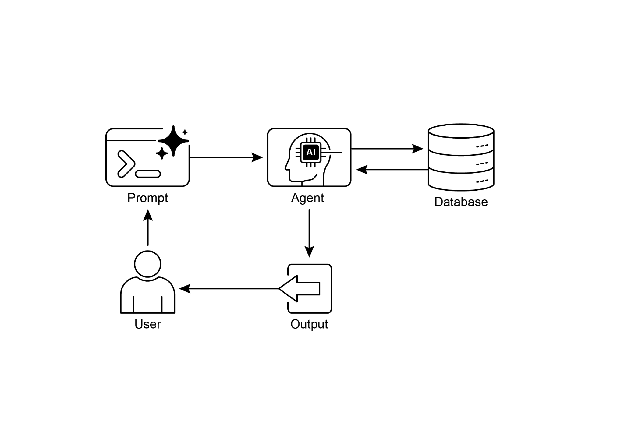 Knowledge Retrieval pattern: an AI agent to query and retrieve information from structured databases
知识检索模式:AI 智能体从结构化数据库查询和检索信息
Knowledge Retrieval pattern: an AI agent to query and retrieve information from structured databases
知识检索模式:AI 智能体从结构化数据库查询和检索信息
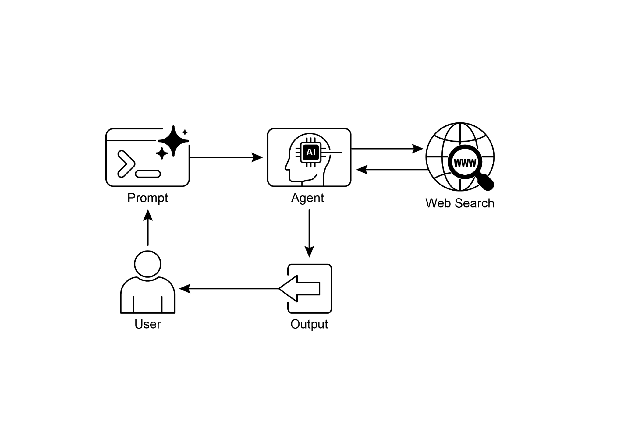 Fig. 3: Knowledge Retrieval pattern: an AI agent to find and synthesize information from the public internet in response to user queries.
图 3:知识检索模式:AI 智能体响应用户查询,从公共互联网查找和综合信息。
Fig. 3: Knowledge Retrieval pattern: an AI agent to find and synthesize information from the public internet in response to user queries.
图 3:知识检索模式:AI 智能体响应用户查询,从公共互联网查找和综合信息。
Key Takeaways
关键要点
- Knowledge Retrieval (RAG) enhances LLMs by allowing them to access external, up-to-date, and specific information.
- 知识检索(RAG)通过允许 LLM 访问外部的、最新的和特定的信息来增强它们。
- The process involves Retrieval (searching a knowledge base for relevant snippets) and Augmentation (adding these snippets to the LLM’s prompt).
- 该过程涉及检索(在知识库中搜索相关片段)和增强(将这些片段添加到 LLM 的提示中)。
- RAG helps LLMs overcome limitations like outdated training data, reduces “hallucinations,” and enables domain-specific knowledge integration.
- RAG 帮助 LLM 克服过时训练数据等局限,减少”幻觉”,并实现特定领域知识集成。
- RAG allows for attributable answers, as the LLM’s response is grounded in retrieved sources.
- RAG 允许可归因的答案,因为 LLM 的响应基于检索的来源。
- GraphRAG leverages a knowledge graph to understand the relationships between different pieces of information, allowing it to answer complex questions that require synthesizing data from multiple sources.
- GraphRAG 利用知识图谱来理解不同信息片段之间的关系,允许它回答需要从多个来源综合数据的复杂问题。
- Agentic RAG moves beyond simple information retrieval by using an intelligent agent to actively reason about, validate, and refine external knowledge, ensuring a more accurate and reliable answer.
- Agentic RAG 超越了简单的信息检索,使用智能体主动推理、验证和精炼外部知识,确保更准确和可靠的答案。
- Practical applications span enterprise search, customer support, legal research, and personalized recommendations.
- 实际应用涵盖企业搜索、客户支持、法律研究和个性化推荐。
Conclusion
结论
In conclusion, Retrieval-Augmented Generation (RAG) addresses the core limitation of a Large Language Model’s static knowledge by connecting it to external, up-to-date data sources. The process works by first retrieving relevant information snippets and then augmenting the user’s prompt, enabling the LLM to generate more accurate and contextually aware responses. This is made possible by foundational technologies like embeddings, semantic search, and vector databases, which find information based on meaning rather than just keywords. By grounding outputs in verifiable data, RAG significantly reduces factual errors and allows for the use of proprietary information, enhancing trust through citations. 总之,检索增强生成(RAG)通过将 LLM 连接到外部、实时的数据源,有效解决了其静态知识的核心限制。该工作流程首先检索相关信息片段,然后增强用户的提示,使 LLM 能够生成更准确和上下文感知的响应。这一过程依赖于嵌入、语义搜索和向量数据库等基础技术,这些技术基于语义含义而不仅仅是关键字来查找信息。通过将输出建立在可验证的数据上,RAG 显著减少了事实错误,并允许使用专有信息,通过引用来源增强了可信度。
An advanced evolution, Agentic RAG, introduces a reasoning layer that actively validates, reconciles, and synthesizes retrieved knowledge for even greater reliability. Similarly, specialized approaches like GraphRAG leverage knowledge graphs to navigate explicit data relationships, allowing the system to synthesize answers to highly complex, interconnected queries. This agent can resolve conflicting information, perform multi-step queries, and use external tools to find missing data. While these advanced methods add complexity and latency, they drastically improve the depth and trustworthiness of the final response. Practical applications for these patterns are already transforming industries, from enterprise search and customer support to personalized content delivery. Despite the challenges, RAG is a crucial pattern for making AI more knowledgeable, reliable, and useful. Ultimately, it transforms LLMs from closed-book conversationalists into powerful, open-book reasoning tools. RAG 的高级演进形式——Agentic RAG,引入了一个推理层,主动验证、协调和综合检索的知识,以获得更大的可靠性。类似地,像 GraphRAG 这样的专门方法利用知识图谱来导航明确的数据关系,使系统能够综合回答高度复杂、相互关联的查询。这种智能体可以解决冲突信息,执行多步查询,并使用外部工具查找缺失的数据。虽然这些高级方法增加了复杂性和延迟,但它们显著提高了最终响应的深度和可信度。这些模式的实际应用正在改变各个行业,从企业搜索和客户支持到个性化内容交付。尽管存在挑战,RAG 是使 AI 更加知识渊博、可靠和有用的关键模式。最终,它将 LLM 从闭卷对话工具转变为强大的开卷推理系统。
References
参考文献
- Lewis, P., et al. (2020). Retrieval-Augmented Generation for Knowledge-Intensive NLP Tasks. https://arxiv.org/abs/2005.11401
- Google AI for Developers Documentation. Retrieval Augmented Generation - https://cloud.google.com/vertex-ai/generative-ai/docs/rag-engine/rag-overview
- Retrieval-Augmented Generation with Graphs (GraphRAG), https://arxiv.org/abs/2501.00309
- LangChain and LangGraph: Leonie Monigatti, “Retrieval-Augmented Generation (RAG): From Theory to LangChain Implementation,” https://medium.com/data-science/retrieval-augmented-generation-rag-from-theory-to-langchain-implementation-4e9bd5f6a4f2
- Google Cloud Vertex AI RAG Corpus https://cloud.google.com/vertex-ai/generative-ai/docs/rag-engine/manage-your-rag-corpus#corpus-management